Every summer as temperatures climb, Texans start looking for ways to hedge their electric bills. For many people, the first thought is putting solar panels on the roof. It is a little more complicated than that, because there are many considerations to work through before you get started. Let's walk through the process.
Step 1: Figure Out How Much Power You Actually Use
The first thing to consider is how much power you use. A great place to start is our free home electricity load calculator, which lets you enter your appliances one by one with options for older, standard, and energy efficient equipment. It gives you a solid estimate of your monthly kilowatt-hour (kWh) usage and breaks down which appliances are costing you the most.
Once you have a calculator estimate, compare it against your actual electric bill. The two numbers should be reasonably close. If they are not, something may be running that you have not accounted for, or an appliance may be performing worse than expected. One note: the calculator is an educational tool and an approximation. Please do not use it to size life-safety equipment.
Start with your load calculation
Find out exactly which appliances are driving your electric bill before you size a solar system.
Step 2: Decide How Much of Your Usage You Want to Offset
Many people think about solar offset in terms of 30%, 60%, and 90% of their total usage. Even a 30% offset is genuinely helpful, especially when combined with home energy improvements like sealing windows and doors with caulk and weatherstripping, adding attic insulation and radiant barriers, and sealing ductwork. Raising the thermostat a few degrees when you are away from home and swapping incandescent bulbs for LEDs still makes a real difference too.
In an older home, efficiency improvements alone can often create another 30% in savings. Every kilowatt-hour you save through efficiency is one you do not need to pay to install on your roof. That math adds up fast.
Step 3: Choose the Right Type of System
The third consideration is whether you want a grid-tied only system, a grid-tied system with battery backup, or a fully off-grid setup. Texas is well known for severe storms and grid outages, so many homeowners choose to add batteries to keep a few critical loads running during an outage: a well pump, the internet router, a refrigerator, and a handful of lights and outlets.
A lot of people are surprised to learn that a standard grid-tied solar system will not keep running during a power outage without a battery backup component. Grid-tied systems simply offset your home's power use during daylight hours as long as the grid is up and running. No grid, no power, even on a sunny day.
Off-grid systems require more planning because every bit of power the home uses has to come from what the system generates and stores. House design and appliance choices matter a great deal. A large all-electric home will need significantly more solar modules and batteries than a smaller, efficient home where zones can be closed off when not in use.
Real Numbers from a Hill Country Home in 2025
Once you have calculated your usage, settled on an offset goal, and chosen the right system type, you can estimate the size of the solar array and battery storage you need. Here is a real example from my own home.
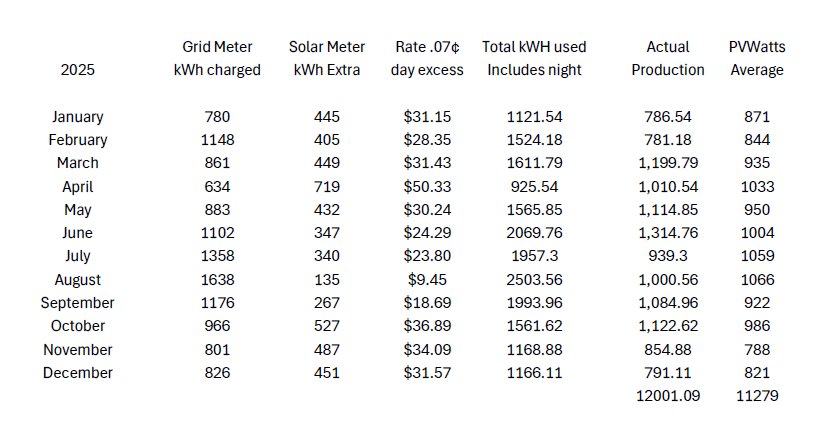
I have twenty 365-watt solar modules on a south-facing ground mount array, a 7.3 kW system that is grid-tied with no batteries. Using the PVWatts Calculator, this size array is projected to produce approximately 11,279 kWh per year. In practice, my system produced about 6% more than that estimate.
On average, my solar system covered about 71% of my total electric usage across the year. April production covered roughly 75% of consumption. August, with the air conditioning running hard, covered only about 38%. That seasonal swing is completely normal in Texas and worth planning for.
When I ran my August numbers through the load calculator, it was extremely close to my actual August electric bill. That kind of real-world accuracy is exactly what you want before sizing a solar system.
A few practical tips from running a grid-tied system: it pays to run heavy appliances like the clothes dryer and dishwasher during the day, when your solar is producing and you would otherwise be paying retail rates for grid power. At night, when you are drawing from the grid, you are offsetting at a lower wholesale rate. Timing your usage around your production makes a meaningful difference in your monthly bill.
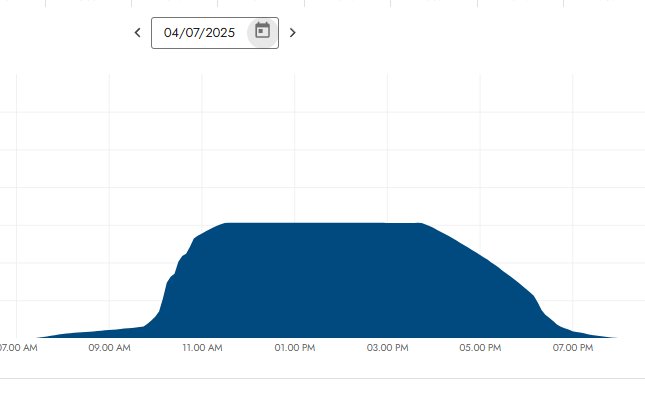
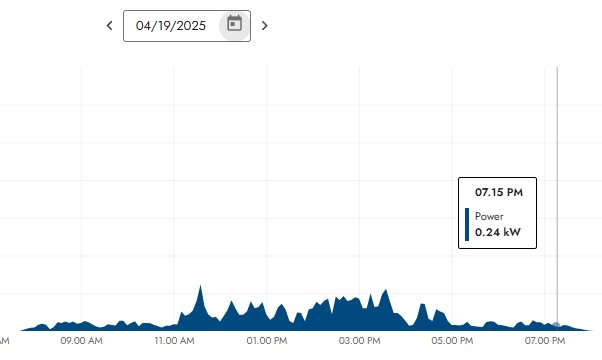
Each day looks completely different on the monitoring equipment and is capped at the maximum output of the inverter, which converts solar DC power into the AC power your home uses. In my case that cap is about 6.1 kW. Here is what a perfect sunny day looks like compared to a heavily overcast one.
Putting It All Together
So how much solar do you need for your Texas home? The honest answer is: it depends. It depends on how much electricity you use, how much of that you want to offset, and what kind of system fits your situation. A small, energy-efficient home may need only a few kilowatts to make a significant dent in the electric bill. A large all-electric home should plan for a considerably bigger system.
The good news is that you do not have to guess. Start with your electric bill and the load calculator to nail down your usage. Then compare those numbers with the PVWatts Calculator to get a realistic picture of what a given system size would produce in your specific location. And do not overlook efficiency improvements. Reducing how much power your home needs in the first place lowers the cost of the whole project.
A properly designed solar system starts with understanding your energy needs, whether that is off-grid living, backup power during outages, or simply lowering your monthly bill. Once you have your numbers, the right system size becomes much clearer.
Ready to run your numbers?
Use our free load calculator to find out exactly what your home uses and where the biggest opportunities are.